
Golam Kasem Daddy Lecture 2026
July 36: A museum in the making
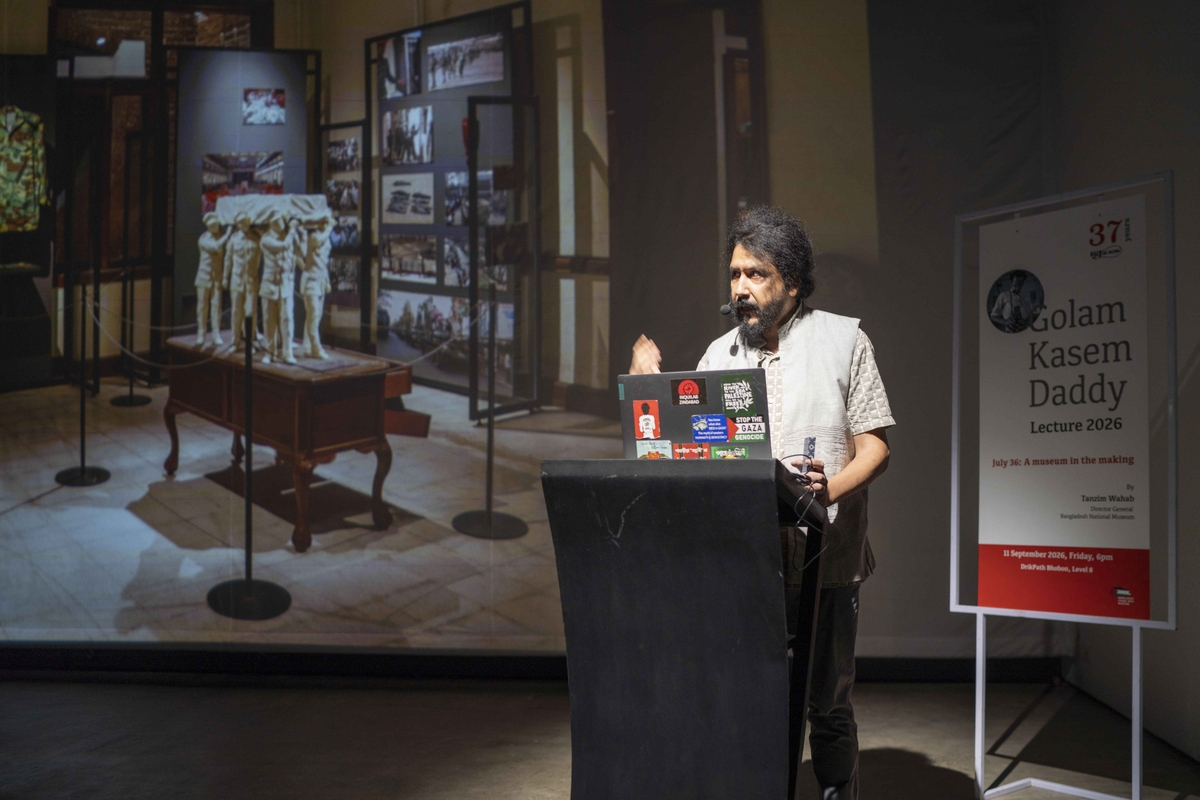
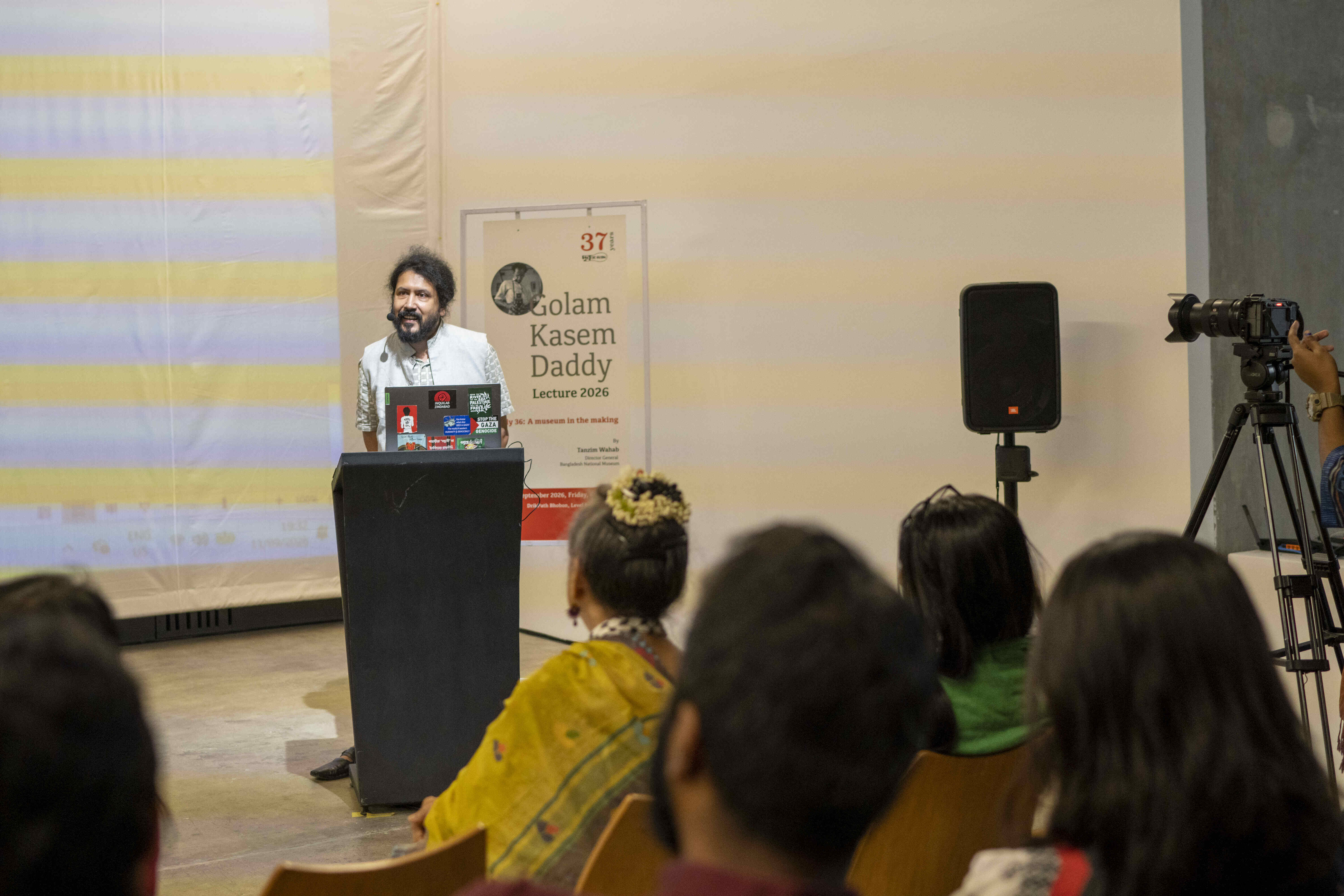
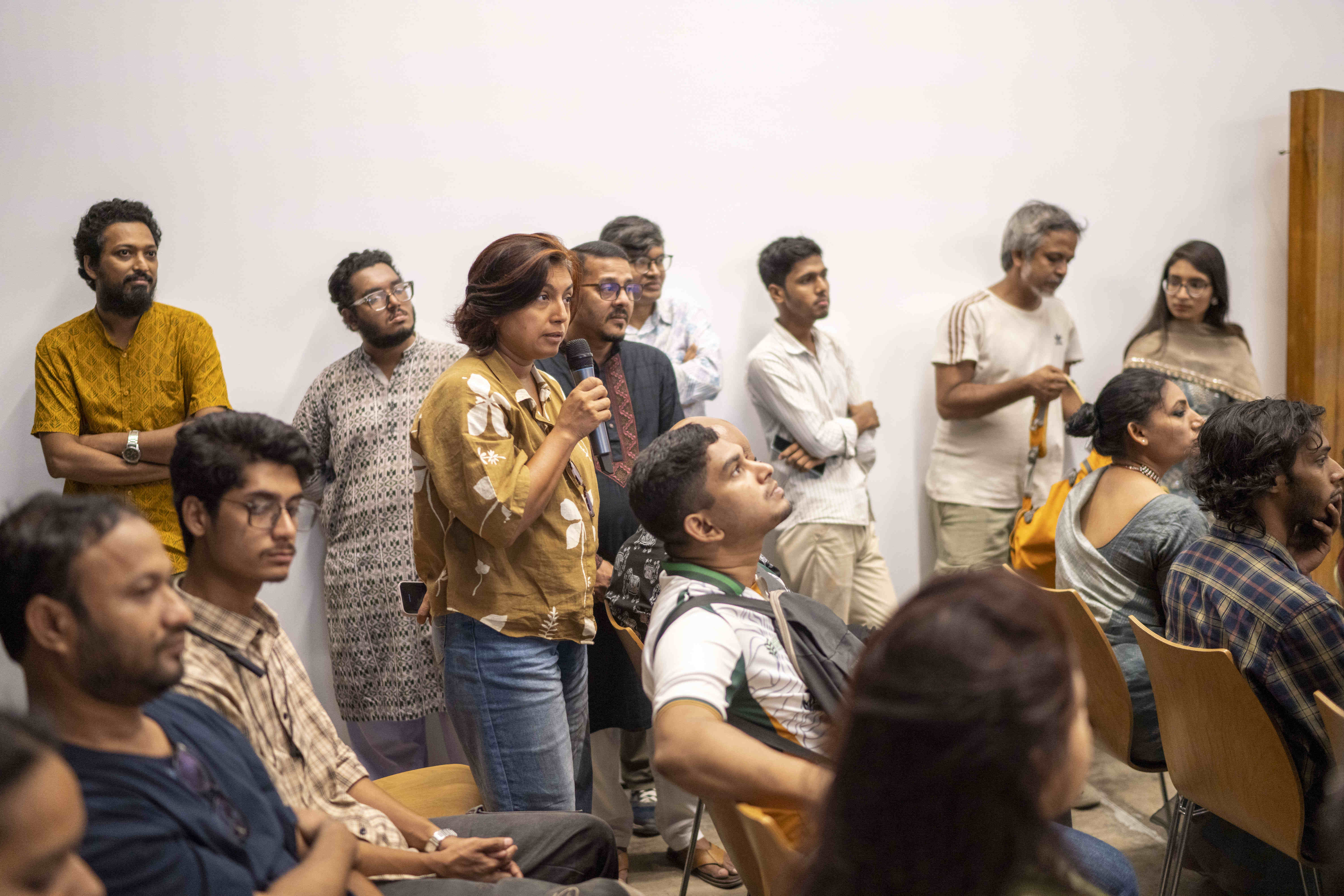
Golam Kasem Daddy Lecture 2026, ‘July 36: A museum in the making’ was held at DrikPath Bhaban, Dhaka, as part of Drik Picture Library’s 37th anniversary celebrations. The lecture was delivered by Tanzim Wahab, Director General of the Bangladesh National Museum.
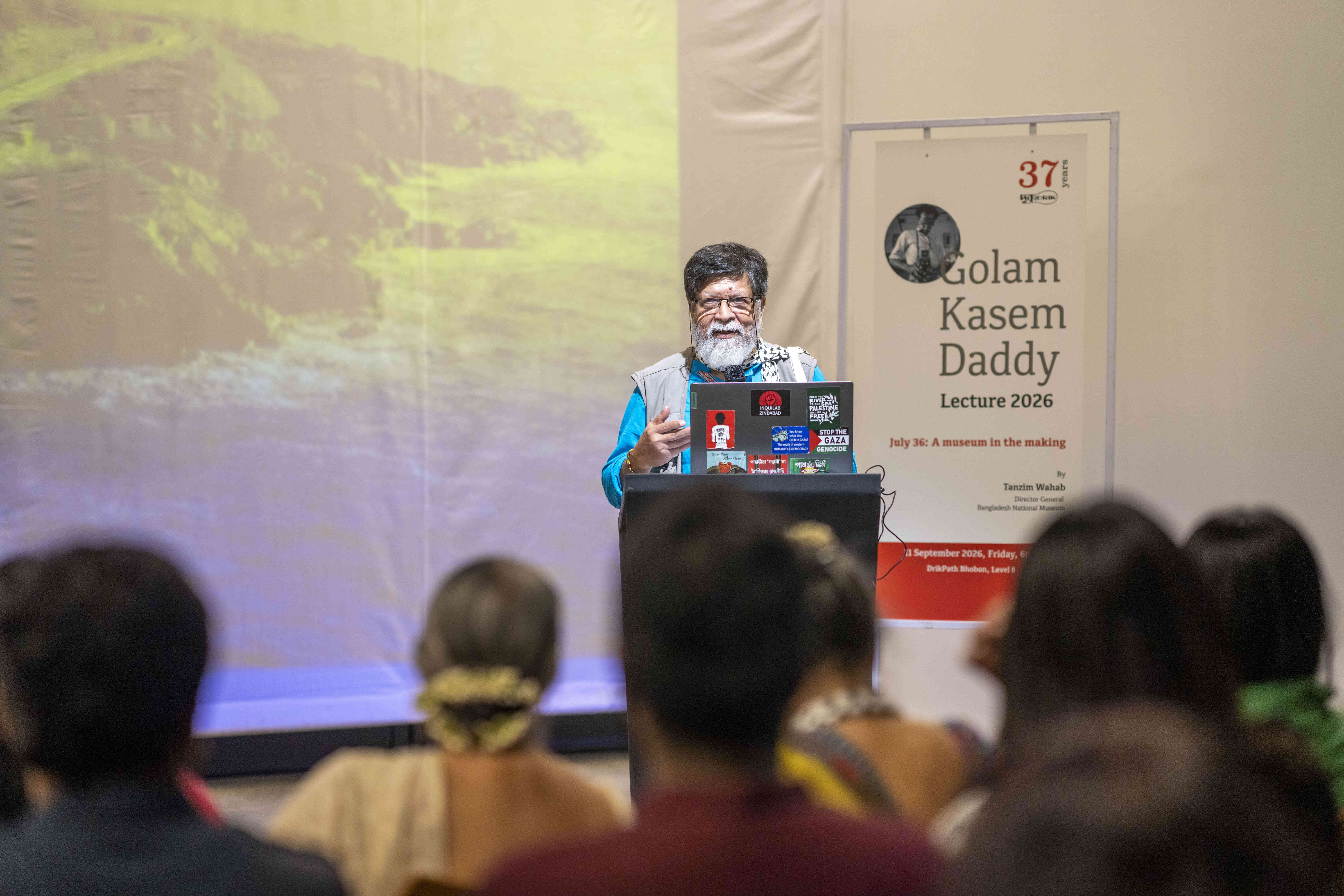
Opening the event, photographer, activist and Drik Managing Director Shahidul Alam paid tribute to Golam Kasem Daddy, describing his contribution to Bangladeshi photography and his lifelong passion for learning. He noted that Drik has organised the lecture series annually since 2009 to preserve Daddy’s legacy as a pioneering photographer, writer, and learner.
Shahidul Alam also highlighted Tanzim Wahab’s journey from Pathshala South Asian Media Institute student to a leading figure in photography and cultural practice, now serving as Director General of the Bangladesh National Museum.
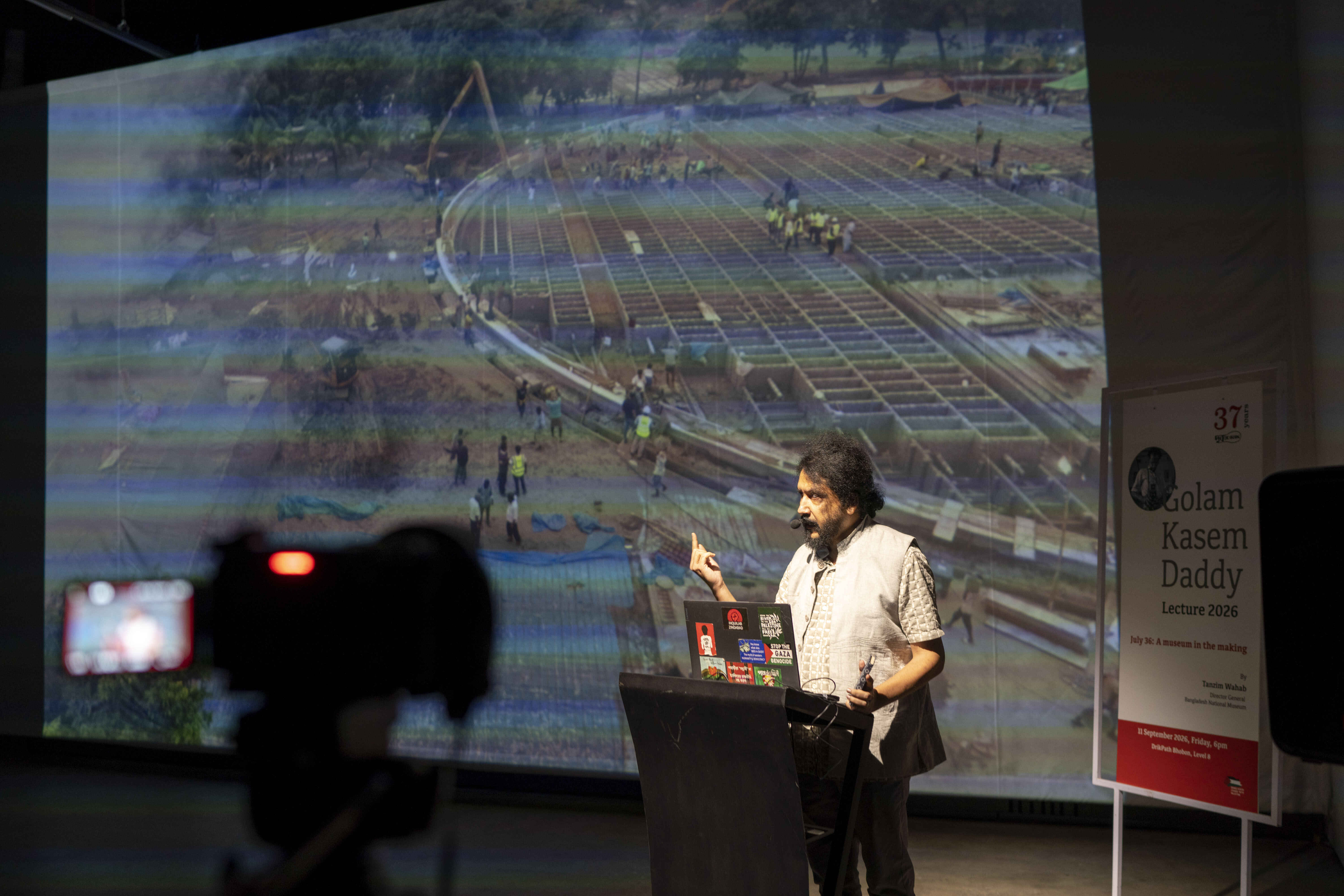
In his lecture, Tanzim Wahab discussed the transformation of Ganabhaban, the former prime minister’s residence, into the July Mass Uprising Memorial Museum. He explained that the museum was created not as an act of nostalgia, but as a way to preserve collective memory and confront the history of state violence.
Wahab described how the site, damaged after the July 2024 uprising, contained scattered documents, records, and personal materials. These were collected, preserved, and developed into an archive that later became a significant historical record.
He said the museum aims to honour those killed, injured, and affected during the July Mass Uprising while documenting years of authoritarian rule. Its exhibits include personal belongings, photographs, videos, testimonies, and records related to enforced disappearances, killings, the BDR massacre, and the Aynaghar.
The museum continues to evolve as new stories and materials are added. Beyond exhibitions, it also serves as a space for seminars, discussions, and cultural programmes, attracting thousands of visitors, including students.
Wahab acknowledged several challenges, including the need for better security, permanent staffing, and facilities such as a proposed “healing room” for visitors affected by trauma. He also discussed debates around including wider historical issues, such as border killings, within the museum’s scope.
Concluding his lecture, Wahab described the museum as an ongoing project that requires more resources, planning, and participation to become a stronger national memorial preserving Bangladesh’s collective memory.
Photo: Habibul Haque/Drik